
Why Aircraft Maintenance Training Must Evolve for a New Generation.
A generational shift is quietly reshaping the way aircraft engineers learn, engage, and grow. The model many of us came up with no longer fits the learners walking through the door.
We are now training Millennials, Gen Z, and increasingly, Gen Alpha; digital natives raised on mobile devices, hyperconnectivity, and instant information. And while aircraft maintenance demands high precision, discipline, and regulatory compliance, we must ask ourselves: are our current training strategies still relevant, or are they holding back the future of aviation maintenance?
“Heutagogy emphasizes learner agency, adaptability, and capability development.”
From Pedagogy to Heutagogy: Rethinking Learning Models
Traditionally, aircraft maintenance training has been grounded in a pedagogical model—trainer-led, content-heavy, and structured with strict outcomes and assessments. While this has ensured compliance with international standards, it hasn’t evolved much to accommodate learner autonomy or real-world decision-making.
Enter andragogy (adult learning theory), which shaped how we taught Millennials—more self-directed, problem-solving based, and rooted in experience. But even that now feels inadequate.
The next leap forward is heutagogy, or self-determined learning. Coined by Stewart Hase and Chris Kenyon in 2000, heutagogy emphasizes learner agency, adaptability, and capability development—all essential traits in high-consequence environments like aircraft maintenance.
Heutagogy aligns with what Gen Z and Gen Alpha expect: personalized, tech-enabled, socially connected learning that empowers them to take ownership of their progress. For regulators and training providers, this implies not only a shift in how courses are designed, but how national aviation authorities specify learning outcomes and approve training programmes.
The Digital Expectations of Young Learners
Research by Pew Research Center, McKinsey, and education think tanks such as EDUCAUSE reveal clear distinctions in how different generations learn:
- Millennials (born 1981–1996) value flexibility, continuous feedback, and collaborative learning. They’ve lived through the transition from analog to digital.
- Gen Z (born 1997–2012) are true digital natives. They prefer visual learning (think YouTube, TikTok, and gamified apps), expect seamless UX/UI, and are motivated by instant feedback loops.
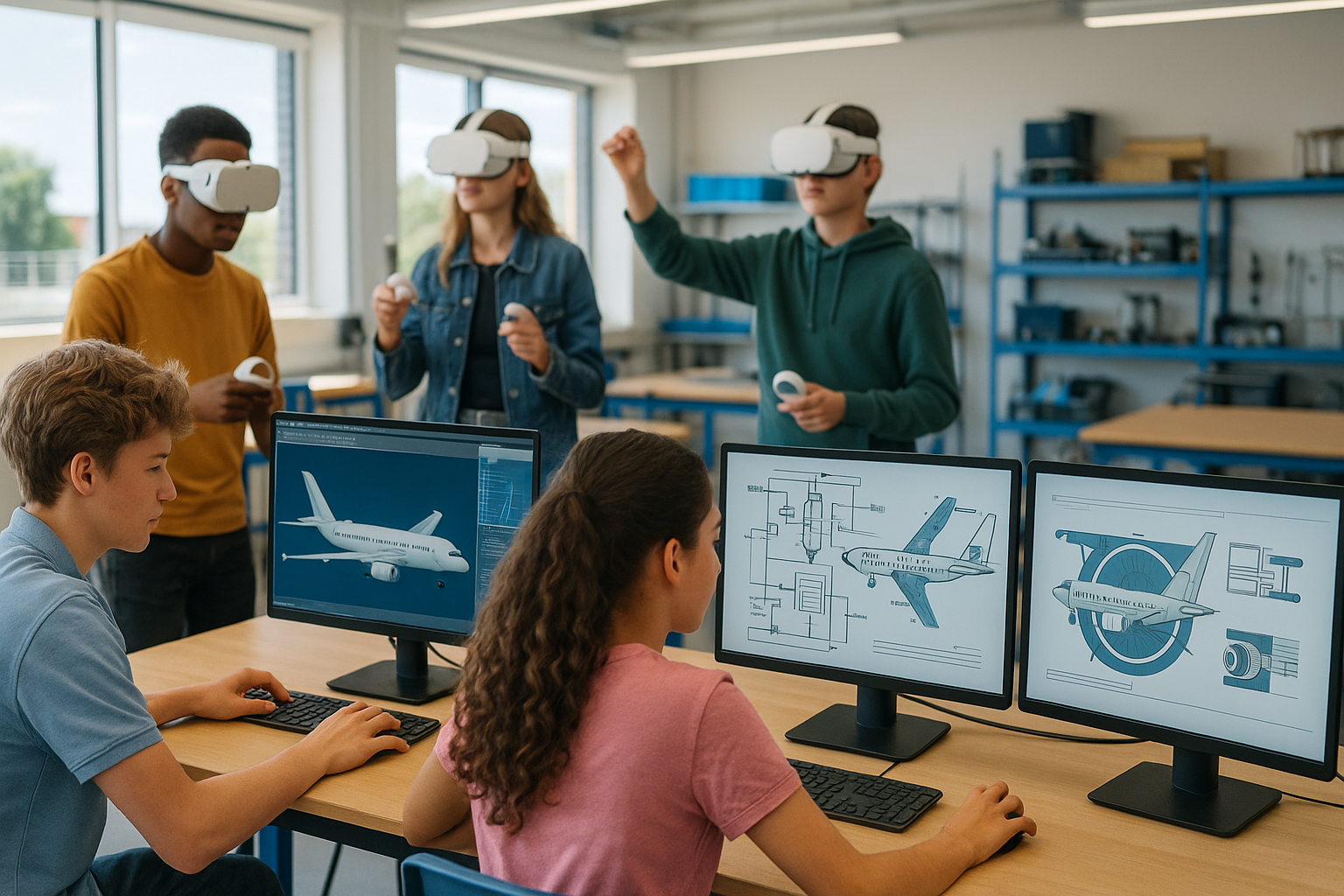
- Gen Alpha (born after 2012) will be the first generation entirely raised in immersive tech environments—AR, VR, voice interfaces, and AI chatbots. They don’t “use” tech; they exist in it.
In a study by Barnes & Noble College, Gen Z learners reported a preference for learning that’s immersive, participatory, and tech-rich, not passive. They want to be part of a community, not just a course.
This shift isn’t a trend—it’s a paradigm shift, and we ignore it at our peril.
What Does This Mean for Aircraft Maintenance Training?
The implications are profound. Our future technicians are being trained using systems and models that pre-date their worldview. Consider these typical mismatches:
- Digital learners in analogue environments: PowerPoint slides, printed manuals, and static CBTs don’t cut it anymore.
- One-size-fits-all courses: Young learners expect tailored, modular, micro-learning pathways they can revisit on demand.
- Limited use of immersive tech: While the gaming and entertainment industries thrive on AR/VR, our classrooms often resist even basic simulation or AI-enhanced assessments.
As an industry, we must evolve from content deliverers to learning experience designers. We must modernize the frameworks that define and approve competency.
Embracing Emerging Learning Technologies
We’re not lacking in tools—just adoption. Mainstream technologies already reshaping training in other sectors include:
- Virtual Reality (VR) and Augmented Reality (AR): Ideal for simulating engine run-ups, component replacement, and fault diagnostics in a safe, repeatable way.
- AI-driven tutors and chatbots: Available 24/7, they provide instant feedback, answer questions, and adapt to the learner’s pace.
- Micro-learning platforms and mobile apps: Delivering bite-sized, gamified content for just-in-time learning.
- Social learning networks: Mimicking the functionality of platforms like Instagram or Discord, these tools foster peer-to-peer learning and community.
The hesitancy often stems from a perceived risk: that these tools are unproven or too complex for high-stakes environments. But the opposite is now true. These technologies increase retention, reduce time to competency, and boost learner confidence—especially among younger cohorts.
Regulatory Innovation is Essential
Regulators and others have done remarkable work in maintaining the integrity and safety of aviation training. But now, they too must adapt.
- Competency-based training and assessment (CBTA) initiatives from ICAO are a step in the right direction but need to go further with curriculum structure reviews and practical steps to align assessment standards with national education frameworks.
- Approval standards for Part-147 organisations still emphasize traditional learning models and need revising to incorporate a more learner-centric, ‘learning on demand’ approach.
- Few regulatory bodies have embraced AR/VR and other mainstream learning technologies as acceptable primary training methods—despite their demonstrable efficacy.
There’s a pressing need to revise the curriculum frameworks themselves, moving from knowledge-heavy, instructor-led designs to capability-based, learner-centric approaches. Heutagogy must be reflected not just in training delivery, but in how authorities write and audit training requirements.
The Bigger Picture: Workforce Attraction and Industry Survival
Beyond engagement and effectiveness, this is also about attracting talent. Aircraft maintenance, like many skilled trades, is facing a workforce crisis. Gen Z and Gen Alpha are not naturally gravitating to these roles—often because the training journey looks outdated and uninspiring.
A fresh, tech-forward, learner-led approach could change that narrative.
Imagine a training pathway that feels like a game, delivers instant feedback, offers peer support, and evolves with the learner. That’s what our future professionals want—and frankly, expect.
“This shift isn’t a trend—it’s a paradigm shift, and we ignore it at our peril.”
A Call to Action for Training Leaders and Regulators
So where do we go from here?
- Training organisations must invest in new tools, methodologies, and content formats that align with how young people learn today.
- National Aviation Authorities and global bodies must modernize curriculum design frameworks and approval processes, allowing innovation to thrive.
- Industry consortia and OEMs must collaborate to define the standards for immersive, tech-led training content—and make it scalable and affordable.
The challenge is not technical. It is cultural.
And the question we must all ask—whether we’re responsible for a single classroom or an international curriculum—is this:
Are we designing training for how we were taught, or for how they actually learn?
Because the sky is changing. And if we want the next generation to maintain it, we must meet them where they are—and help them fly.
Please add your comments below – what are the challenges and / or successes of engaging young people in a training environment in the last five years?


Leave a Reply